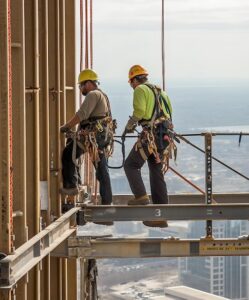
It’s crucial to align your choice of control measures for preventing or reducing the risk of falls from height with the hierarchy previously outlined. Here are some key considerations:
- Elimination or Safe Spaces: First and foremost, aim to eliminate the need for work at height, or use safe spaces whenever reasonably practicable. These methods are the most effective in reducing the risk.
- Collective Equipment and PPE: If you can’t avoid working at height, consider using collective safety equipment. Personal Protective Equipment (PPE) should only be used as a last resort, and it should not replace other control measures.
- Avoiding PPE Substitution: For instance, if it’s possible to eliminate the need for working at height by using extension poles for window cleaning, it’s not advisable to opt for PPE solutions like belts with short lanyards.
- Specific Equipment Requirements: Keep in mind that specific work equipment, such as working platforms, fall arrest equipment, and ladders, may have their own unique requirements for use and inspection. Ensure that these requirements are met.
By adhering to this approach and prioritizing control measures in accordance with the hierarchy, you can effectively reduce the risk of falls from height and enhance workplace safety.